Planning a Trip to Santorini
Which village to sleep in, whether the caldera view is worth what it costs, how many nights before the island starts repeating itself, and how the ferries and flights really connect. Santorini rewards decisions made early.
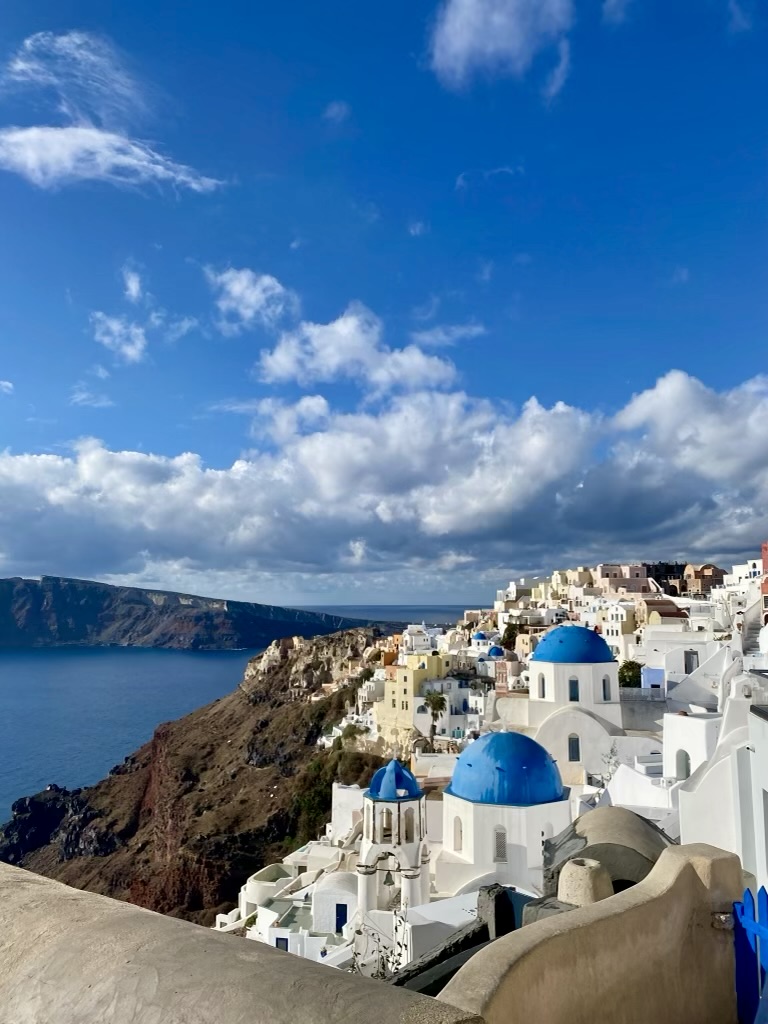
Santorini is the most photographed island in Greece and the easiest one to get wrong. The village you choose decides your whole trip: how far you walk to dinner, how many steps stand between you and your room, whether you watch the sunset from your own terrace or from a crowd three deep.
It is also a volcano, which means cliffs, stairs and donkey paths rather than long sandy beaches. I am always honest with clients about that — and about the cruise-ship hours, when Oia and Fira fill and then empty again. Plan around those rhythms and the island is as extraordinary as the photographs promise.
Where to stay in Santorini.
Oia
Honeymoons, first visits
The postcard: blue domes, cave suites, the famous sunset. Beautiful and busy — midday brings the day-trippers and the sunset brings everyone. Many hotels mean a great many steps, so I confirm the walk from the road to your door before booking.
Imerovigli
Couples who want quiet and the view
The highest point on the caldera, ten minutes from Fira, with the same astonishing view and a fraction of the crowd. This is where I send couples most often. Little in the way of nightlife, which is precisely the appeal.
Fira & Firostefani
Shorter stays, walkability, value
The island's hub: shops, restaurants, the bus and taxi network, and caldera views at gentler prices. Practical and lively. Firostefani is the calmer edge of it, a level walk from town along the cliff path.
Oia's beach side — Vlychada, Perissa & Akrotiri
Families, swimming, longer stays
The southern and eastern coasts trade the caldera view for black-sand beaches, easier ground underfoot and pools you actually swim in. Good value, and the right choice if you want sea days rather than terrace days.
What to book ahead in Santorini.
The hotel, six to nine months out
This is the single decision that matters. The caldera hotels with private terraces and plunge pools are a small inventory, and the honeymoon dates go first. I will tell you which rooms actually have the view they advertise, which have shared terraces, and which cave suites have no natural light at all.
A private catamaran afternoon
The best day on the island is spent off it: the Red and White Beaches, the hot springs, a swim in water you cannot reach from land, lunch cooked on board. Semi-private sailings are good value; a private charter is worth it for a celebration or a group of friends.
Sunset dinner, and the alternative
The cliffside tables in Oia are reserved weeks ahead for a reason. If you would rather not join the crowd, I plan the sunset from your own terrace with a bottle sent up, then dinner at nine when the village has emptied — my preference, most of the time.
Wine, and the Assyrtiko you will want to ship home
Santorini's vines grow in volcanic ash in low woven baskets, and the wine is unlike anything else in Greece. A private tasting at two estates in the late afternoon is one of the island's quiet pleasures, and a good antidote to a day of views.
Ferries, flights and transfer timing
Fast ferries link Santorini to Mykonos, Naxos, Paros and Crete in a few hours, but they cancel in strong wind and the summer sailings sell out. Flights from Athens take forty-five minutes. I build island hops with real margins, pre-arrange port transfers, and never put a ferry and a long-haul flight on the same day.
Arriving in Santorini.
Flying via Athens, or the ferry
Most travelers connect through Athens to Santorini (JTR) — a short flight, and the one I recommend on arrival day when you are already tired from the Atlantic crossing. The high-speed ferry from Piraeus takes most of a day and can be cancelled in wind; it is lovely for island-hopping between Santorini, Mykonos, Paros and Naxos, less lovely as your first leg.
The airport and port are chaos — plan the transfer
Santorini's airport is tiny and the old port at Athinios is a scrum of buses, quad bikes and cars on a switchback road. A pre-arranged private transfer is not a luxury here; it is the difference between starting your honeymoon calmly and standing in the sun with your cases.
Cliffside hotels mean steps
In Oia, Imerovigli and Fira, cars stop at the top and the rest is stairs, often many of them, sometimes with a porter and a donkey path. I ask about knees, luggage and pregnancy before I book a caldera room, and for anyone who would rather not climb I move the stay to a level property with the same view.
Getting around the island
Buses run to Fira and back and little else usefully; taxis are famously few. I arrange a car and driver for the day you want the wineries and the south, and a rental only for confident drivers comfortable with narrow lanes and summer traffic. ATVs look fun and account for most visitor injuries here.
The Santorini must-sees, timed to the light.
The Oia sunset, done differently
Everyone crowds the Byzantine castle ruins in Oia at sunset. I book a caldera-view dinner, a private sailing catamaran, or the terrace of a small hotel instead — same sun, no elbows. Or reverse it: Oia at sunrise is empty, blue and the best photograph of your trip.
The caldera walk from Fira to Oia
Roughly six miles along the rim through Firostefani and Imerovigli, with Skaros Rock as the halfway prize. Start at seven, carry water, and take a taxi or a driver back. It is the single best way to understand the shape of the island.
Akrotiri and Ancient Thera
Akrotiri is a Bronze Age town buried by the eruption and roofed for shade — extraordinary, and cool at midday. Ancient Thera sits high above Kamari for the ruins-with-a-view. A guide turns both from stones into a story about why this island is shaped like a crescent.
Assyrtiko wine and the vineyards
Volcanic soil, vines trained in baskets on the ground, and a bone-dry white — Assyrtiko — plus the sweet Vinsanto. Santo Wines, Venetsanos, Domaine Sigalas and Argyros make an afternoon I put in almost every itinerary, with a driver so both of you can taste.
Beaches, boats and the other islands
The beaches here are volcanic: Red Beach, Perissa and Perivolos in black sand, Vlychada's sculpted cliffs. A private sailing day around the caldera with a swim at the hot springs is the honeymoon splurge I most often defend. Thirassia is a quiet half-day; Naxos and Paros pair well by ferry for a second island.
Greek island culture and practicalities.
When the island eats, and what
Dinner starts late — nine is normal, and the tavernas stay open. Eat fava, tomatokeftedes from the island's tiny tomatoes, white aubergine, fresh fish sold by weight, and ask for the local barrel wine once. A small tip rounded up is customary; a slow two-hour dinner is the point rather than a delay.
Villages, churches and respect
Oia, Imerovigli and Pyrgos are villages people live in, and those blue-domed churches are private or in use. Stay off doorsteps and rooftops for photographs, cover shoulders in churches, and keep noise down in the lanes at night. Pyrgos and Megalochori are where I send couples who want the island without the crowd.
When to go, and the wind
May, June, September and early October are the months I book: warm sea, manageable crowds, kinder prices. July and August are hot and very full, and cruise-ship days flood Fira and Oia from mid-morning — I check the ship schedule against your plans. The meltemi wind can cancel ferries and small boats, so I never put a ferry on your flight-home day.
Cash, water and small realities
Cards are accepted almost everywhere, but small tavernas and taxis prefer euros in cash. Tap water is not for drinking; bottled is standard. Plumbing is old across the island — the bin beside the toilet is genuinely used. Pharmacies are excellent for small problems, and English is spoken throughout.
Honeymoons and the quiet hours
Santorini earns its reputation between six and nine in the morning and after the last ship leaves. I plan your caldera time in those hours, put the busy sights at midday when you would rather be inside anyway, and keep at least one day with nothing on it but a plunge pool and the view.
How many nights do you need in Santorini?
Three nights. Enough: one caldera day, one boat afternoon, one wine and beach day, two sunsets. Most travelers find the island complete at three.
Four nights. Comfortable for a honeymoon, with a full day that asks nothing of you and the archaeological site at Akrotiri if you want it.
Santorini plus a second island. Seven to ten nights lets you add Mykonos, Naxos, Paros or Crete — each with a different temperament — with Athens at one end.
When to go. May, June, September and early October give you warm sea and civil crowds. July and August are hot, busy and expensive; winter closes much of the island.
Santorini is one stop in a Greek journey — see custom Greece travel planning for Athens, Mykonos and Crete, and European honeymoons if you are planning the trip for two. Celebrating a milestone with friends? Start with girls trips to Europe.
Let's plan your Santorini.
Send me your dates and what matters most — the view, the swimming, the celebration. I will match the village and the hotel to it.
Start Planning My Santorini Trip