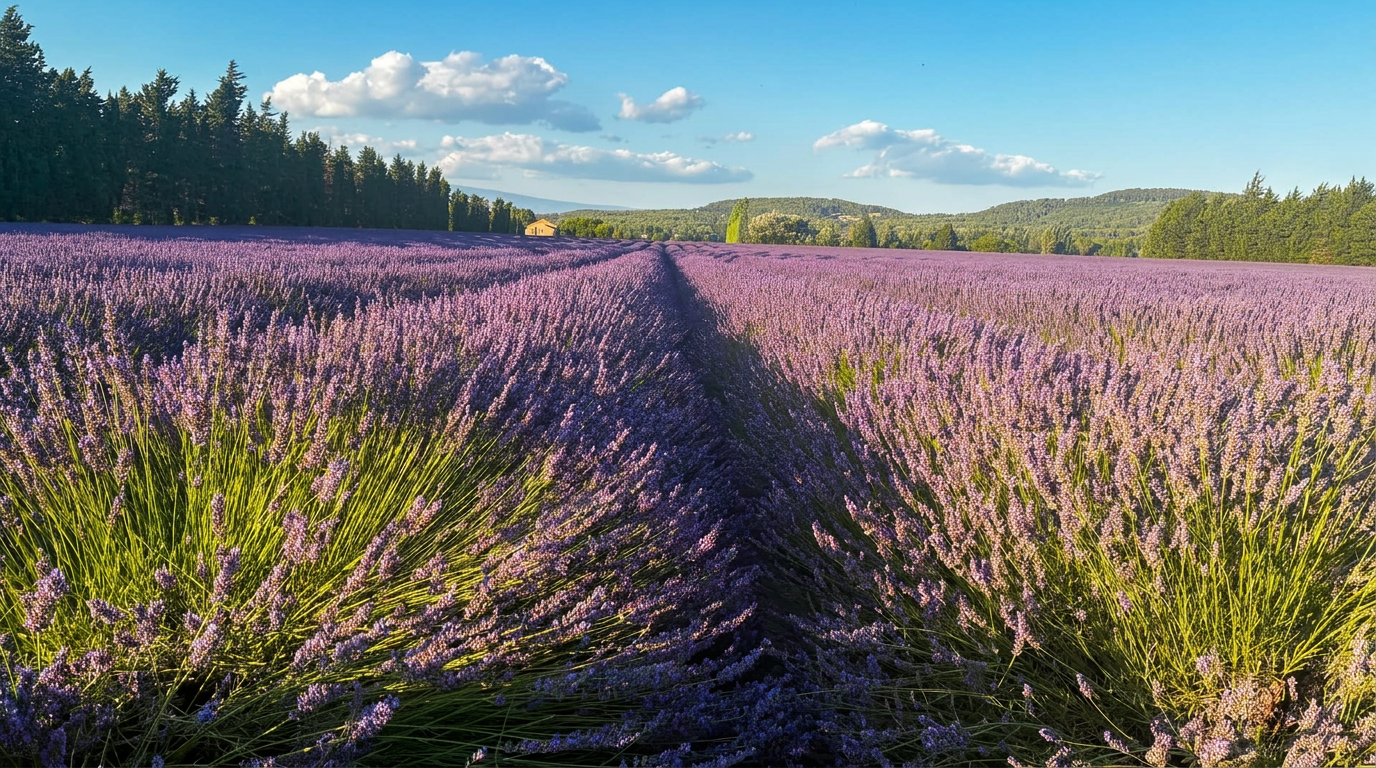
Almost every France trip I am asked to plan starts the same way: a week or ten days, Paris certainly, and then "somewhere in the south — the lavender, the villages, that sort of thing." It is an excellent instinct. Paris and Provence are genuinely complementary: one is dense, urban and scheduled, the other is open, rural and best when half the day is unplanned.
The mistakes happen in the joins. Too few nights in Provence, so the countryside becomes a series of drives. A rental car collected in Paris and parked, uselessly and expensively, for four days. A tight flight home from Marseille on a market morning. Here is the structure I use.
Start in Paris, end in Provence
Nearly always, this direction. You arrive jet-lagged, and Paris forgives that far better than a country road and a car with unfamiliar controls: you can walk, you can nap, you can eat at nine. By the time you take the train south you have adjusted, and Provence becomes the decompression at the end rather than the scramble at the start.
It also makes the flight home easier. Marseille, Nice and Avignon all connect to Paris by air or rail, but if you are flying long-haul out of Paris, I will usually build a final night back in the city rather than gamble a same-day connection on a strike-prone morning.
The night counts that actually work
- Ten nights: four in Paris, five in Provence, one back in Paris before the flight. This is the version I recommend most.
- Nine nights: four in Paris, five in Provence, flying home from Marseille or Nice instead of returning north.
- Seven nights: choose one. Paris with day trips to Champagne, Giverny or the Loire, or Provence with a car and the markets. Squeezing both into seven nights costs you a full day to travel and leaves neither region time to settle.
- Fourteen nights: five in Paris, six in Provence, and three on the Riviera — which is forty minutes from Provence by train and an entirely different mood.
Four nights in Paris is the honest minimum for a first visit, because one of those days is always shorter than you planned. Five in Provence is what lets you have two days where you do nothing but a market, a long lunch and a swim.
Take the train south, rent the car there
The TGV from Paris to Avignon takes under three hours, city centre to city centre, and it is one of the great pleasures of travel in France. Driving the same distance takes most of a day and costs you a night. So: train south, then collect a car at Avignon TGV station for the countryside portion.
You want a car in Provence. The hill villages, the vineyards, the market towns and the ochre cliffs are not connected by useful public transport, and the freedom to turn off for a roadside melon stand is much of the point. You do not want a car in Paris — no parking, no need, and every garage charge is a bottle of good wine you did not drink.
Where to base yourself in Provence
One base, not three. Moving hotels every two nights in the countryside undoes the purpose of being there.
- Saint-Rémy-de-Provence — the best all-round choice. Wednesday market, Van Gogh's landscapes, Les Baux nearby, and within an hour of nearly everything.
- The Luberon (Gordes, Bonnieux, Lourmarin) — the most beautiful and the most winding roads. Perfect for couples who want a stone farmhouse and a pool.
- Aix-en-Provence — if you would rather have a town with real evenings, restaurants and shopping, plus two markets a week.
- Avignon — the most practical for a short stay and the easiest for train arrivals, with the Rhône villages on the doorstep.
A ten-night shape
- Days 1–4, Paris. Left Bank and Orsay; the Marais and the markets; Versailles or Giverny as a half-day with a driver; one evening kept completely free.
- Day 5. Morning TGV to Avignon, collect the car, arrive at your Provence base for lunch. No sightseeing today.
- Days 6–9, Provence. A market morning; a vineyard afternoon in Châteauneuf-du-Pape or the Luberon; the hill villages early, before the coaches; one day with nothing scheduled at all.
- Day 10. Train back to Paris, a final dinner, and home the next morning.
Timing and the lavender question
Lavender is the single most common reason people fix their dates, and it is a season rather than a promise: broadly late June into July, earlier at low altitude and later on the Valensole plateau, and cut once it is harvested. If your dates fall outside that, Provence is still magnificent — the light in September is arguably better and the vineyards are in harvest — but I will tell you honestly rather than let you arrive expecting purple fields.
May, June, September and early October are the best windows overall. August is hot, the roads are busy with French holidaymakers, and many family-run restaurants close.
What I would add if you have the days
Champagne, an hour from Paris by train, for a private cellar visit. The Loire, for two or three châteaux and a Vouvray tasting. Or the Riviera at the end, for sea days and a private boat morning out of Villefranche. All three connect cleanly by rail, which is why a France itinerary can be ambitious without ever feeling rushed.