The question I am asked most often about France is how many days in Paris is enough. The answer depends less on the length of your list than on how you like to spend a morning. Two travelers can have exactly the same four days and come home with completely different opinions of the city, and the difference is almost always pace.
Three days: the shortest stay that still feels like Paris
Three full days — not three days including the arrival flight — is the minimum I plan for a first visit. It gives you one major museum, one grand monument, two neighborhoods explored properly on foot, and two long dinners. It does not give you Versailles, a day in Champagne, or the luxury of repeating a café you loved.
Jet lag matters more than anyone expects. Your first afternoon in Paris is not a sightseeing afternoon; it is a walk, a coffee, an early dinner and a full night of sleep. Plan it that way and you gain a day rather than losing one.
Four to five days: the version I recommend
Four or five days is where Paris stops being a checklist. You get the museums without finishing them, time to sit in the Luxembourg Gardens with nowhere to be, one day trip if you want it — Versailles, Giverny, Reims and the Champagne houses are all easy by train — and at least one evening that was not planned at all. That unplanned evening is usually the one people describe to me afterwards.
Where to stay in Paris, honestly
- Saint-Germain (6th) and the 7th. The classic first-visit choice. Walkable to the Musée d'Orsay, the Louvre and the river, with the best density of cafés, bakeries and small shops. If you only come once, stay here.
- The Marais (3rd and 4th). Younger, denser, more design shops and wine bars. Wonderful if you like walking out of your door into activity; noisier at night.
- The 1st and 8th. Grand hotels, the rue Saint-Honoré, the Ritz and the big names. The right choice for a celebration; less neighborhood life at street level.
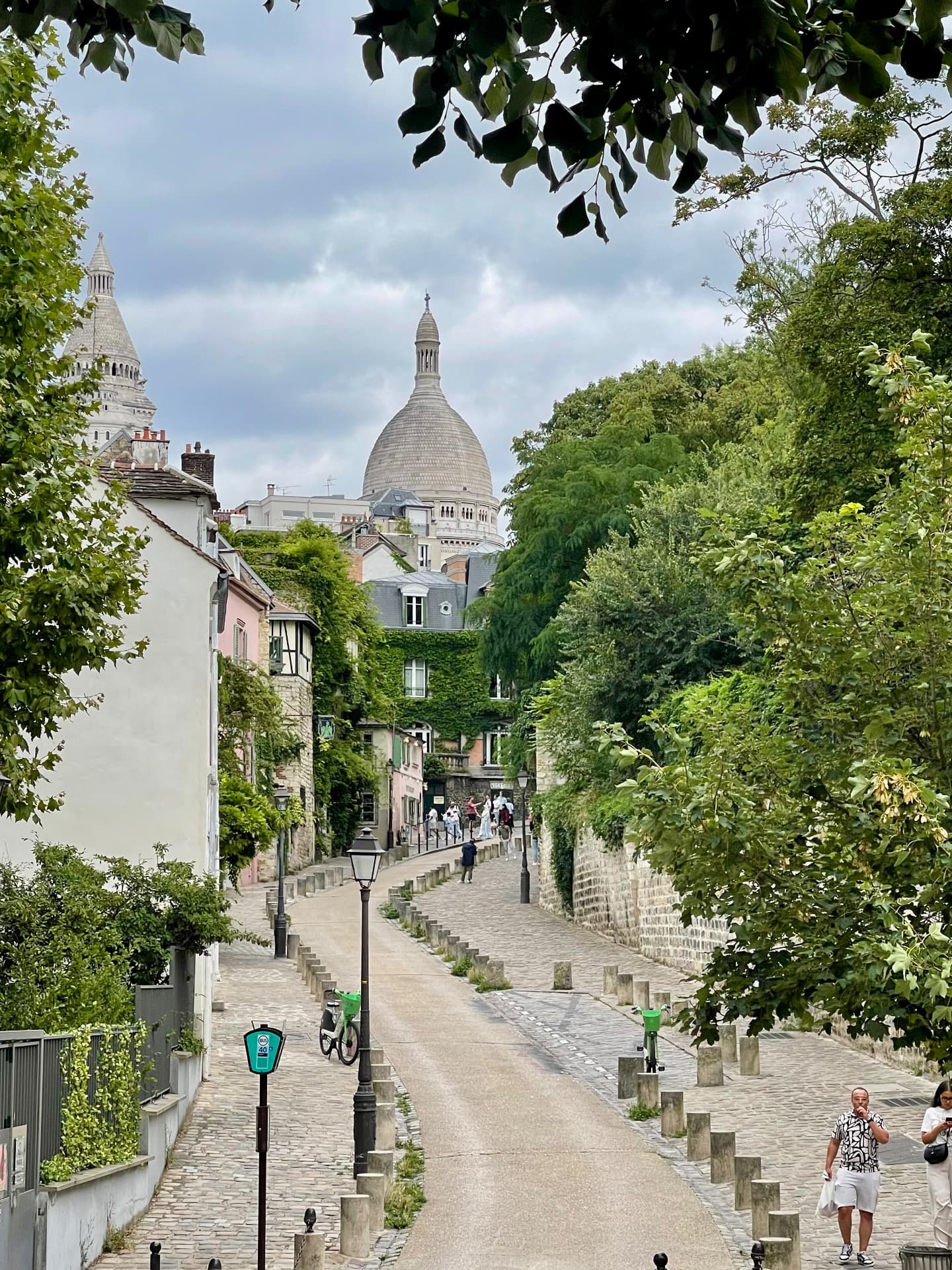
- Montmartre (18th). Beautiful, villagey, and hilly in a way photographs hide. Lovely for a second visit or a longer stay, harder as a base for three busy days.
What to book before you fly
Paris rewards a small amount of advance work. The things that sell out or ruin a day if left to chance: timed entry to the Louvre and the Musée d'Orsay, the Eiffel Tower summit, Sainte-Chapelle, dinner anywhere you have specifically read about, a Versailles morning slot, and the Palais Garnier if you want to see the auditorium rather than the corridors. Two months ahead is comfortable; two weeks is tight for a good table.
Everything else — the Marais, Montmartre, the Left Bank markets, the Seine in the evening — is better left open. The city is at its best in the hours you have not scheduled.
Getting in from the airport
Charles de Gaulle to central Paris is an hour with traffic. After a night flight with luggage, a pre-booked private transfer is the single best money you will spend on the trip; the taxi queue at Terminal 2 on a summer morning is not a gentle introduction to France. Orly is closer and easier, and if you arrive by train from London or Provence you step out in the middle of the city already.
The best months to go
Late April to mid-June, and September to October. Long light, comfortable walking weather, everything open, gardens at their best. August empties of Parisians and many of the small restaurants I would send you to are closed. December is genuinely lovely — cold, early dark, markets and lit streets — and reads as romantic rather than bleak if you plan it as an indoor-and-evenings trip.
Where a planner actually helps
Not with finding the Eiffel Tower. With the sequencing: which hotel puts you within walking distance of the days you have chosen, which morning to use for the museum you care most about, which dinner reservations to hold and which nights to leave free, and how to pair Paris with Provence, the Loire or Normandy without spending your holiday in transit.
If you want the longer version — neighborhoods, arrival logistics, must-see order and local etiquette — read my full guide to planning a trip to Paris linked below, or tell me your dates and I will shape the days around you.